
The Designer's Responsibility in Regenerative Travel




Synopsis
Graeme Labe and Micayla Freeman argue that regenerative hospitality demands a fundamental shift in how designers see their role: from minimising impact to actively strengthening the living systems of place. Through examples from South Africa and Mexico, it shows how context-responsive architecture, local materials, and craft-based renewal can tie guest experience to long-term stewardship rather than one-off “sustainable” gestures.
Sustainability has become standard practice in hospitality. Metrics are measured, certifications pursued, and waste minimized at source. Yet a critical question now emerges: are we simply perfecting how to do less harm, or are we fundamentally changing how hospitality relates to the places and communities it depends on?
Regenerative design diverges from sustainability at a philosophical level. Where sustainability manages environmental resources for efficiency, regenerative design recognizes the environment as a series of dynamic, interconnected living systems that can co-evolve with human systems. By this perspective, design becomes an opportunity to contribute to those systems rather than merely minimize disruption. This mindset aligns with circular-economy thinking and other nature-based frameworks, all of which challenge the linear “take, make, waste” model and look to natural systems for cues about renewal and adaptation.
For designers and architects, regeneration is not a certification to pursue or a label to apply. It is a test of coherence, a responsibility to ensure that every design decision makes sense to every stakeholder involved and can be understood, maintained, and carried forward beyond our involvement.
From Outcomes to Continuity
Hospitality projects are typically judged at moments of completion: opening day, first accolades, certifications achieved. Regenerative design rejects this endpoint mentality in favour of an “open spiral evolution” mindset. It asks that we look further ahead: what happens in year five? Who maintains this system? How does this architecture adapt as ecosystems and communities evolve?
In remote or sensitive settings, this perspective becomes especially important. Designers are often required to balance ecological priorities, community livelihoods, economic targets, and guest experience. Starting with a regenerative outlook helps integrate these considerations rather than treating them as competing demands.
Regenerative work often begins with observation: listening deeply, mapping relationships, and understanding what the landscape and community already know. This helps reveal where existing systems can be supported—whether through environmental care that supports operational logic or community involvement that strengthens stewardship—and where guest experience becomes a vehicle for understanding place rather than consuming it.
Natural systems are constantly in flux. Our work also needs to remain flexible enough to adapt to the changing needs of all stakeholders, human and non-human, as these systems evolve.
Designing for Living Systems
At Madwaleni River Lodge within the Babanango Game Reserve, KwaZulu-Natal, South Africa, regeneration guided decisions from the start. The reserve’s long-term commitment to ecological restoration efforts in consolidating previously fragmented agricultural land provided the foundation. Hospitality was introduced not as an isolated intervention, but as one mechanism supporting rewilding, conservation funding, and sustained economic opportunity.
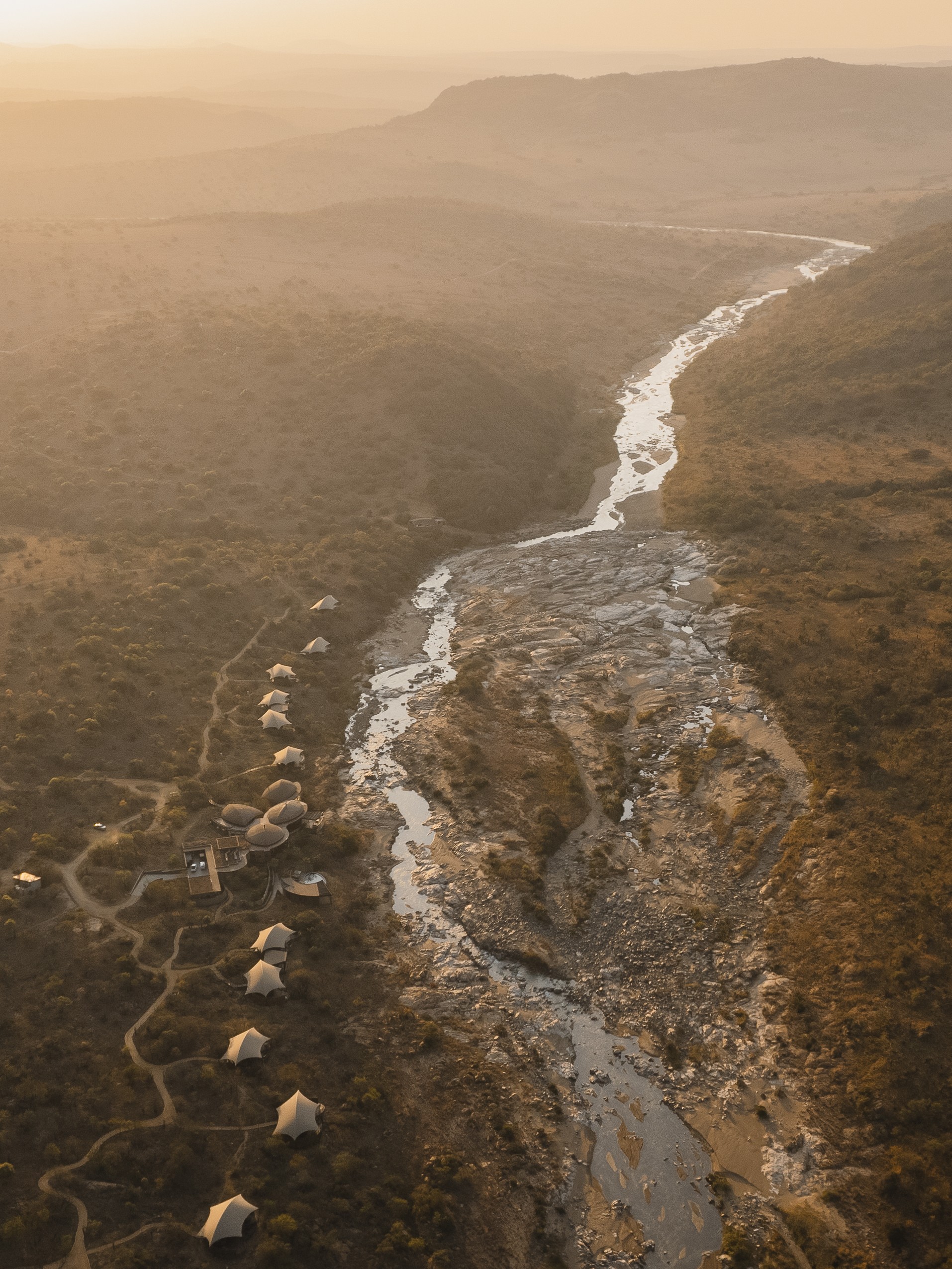
The White Umfolozi River informed the lodge’s placement and character. Seasonal change is made visible, not hidden. The river becomes a living indicator of ecological rhythms, connecting guests to the reality of place. Construction strategies followed the same logic: minimizing disturbance, limiting heavy machinery, and prioritizing local labour and site-sourced materials where sensible. These decisions were driven by practicality: what makes sense in this place, now and over time?
The Boma, an outdoor dining experience, represents one of our most tangible expressions of regenerative design in practice. As part of the site’s ecological rehabilitation, invasive black wattle is selectively removed and handwoven into the structure using traditional Zulu craft techniques. This seasonal process not only restores clogged waterways but reframes invasive species from an environmental burden into a cultural and material resource.
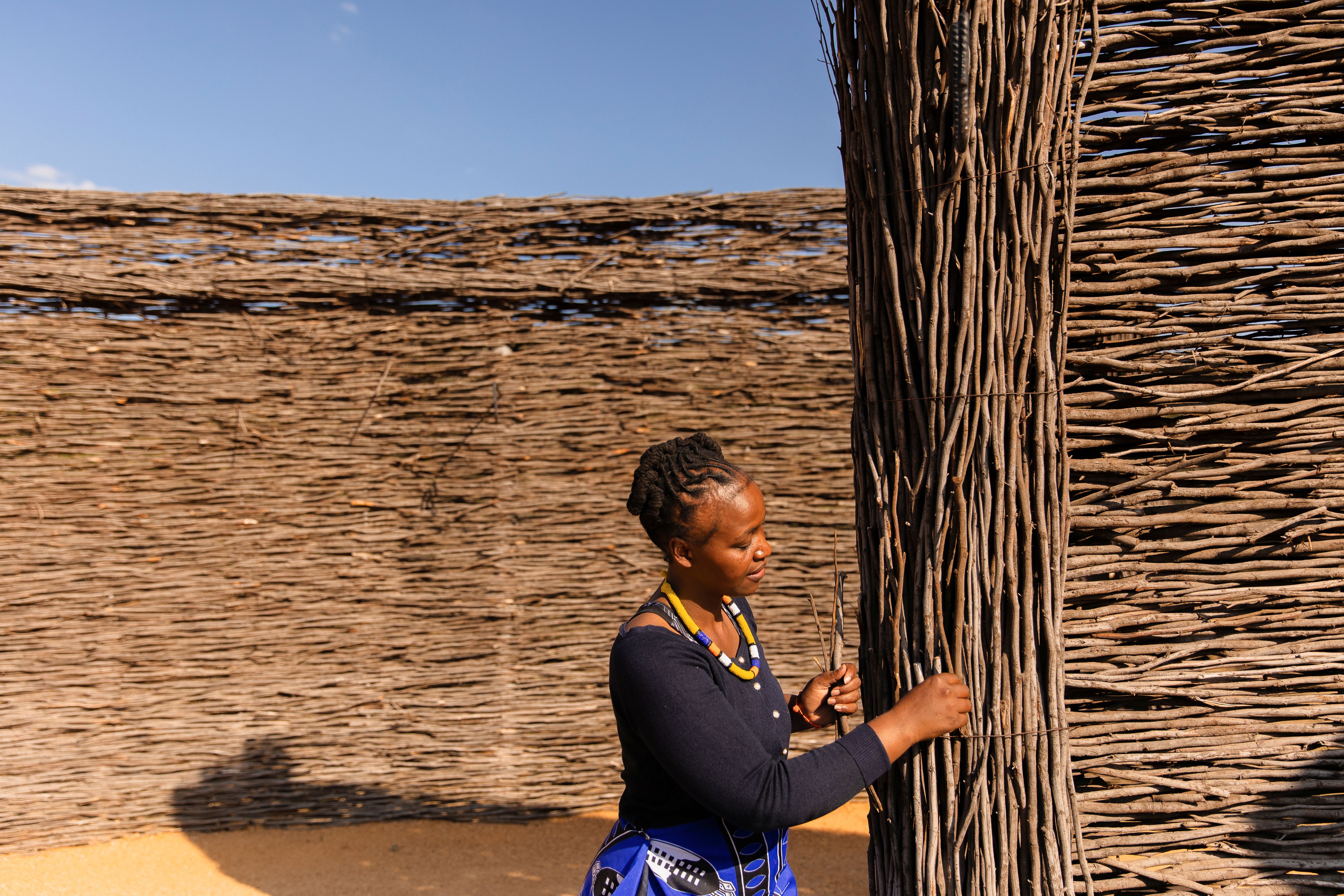
Rather than a permanent object, the Boma is intentionally designed to weather and eventually fail. Its renewal forms part of a cyclical system where ecological management, craft, and community livelihood remain interconnected. Each harvest generates local employment and sustains traditional skills, embedding cultural practice within environmental stewardship. The result is not a static intervention, but a living framework: a space where guest experience, landscape restoration, and community participation evolve together over time.
Context-Responsive Design Principles
Regenerative design develops its own logic in each context, shaped by landscape, culture, economic realities, and stewardship capacity. There is no universal template.
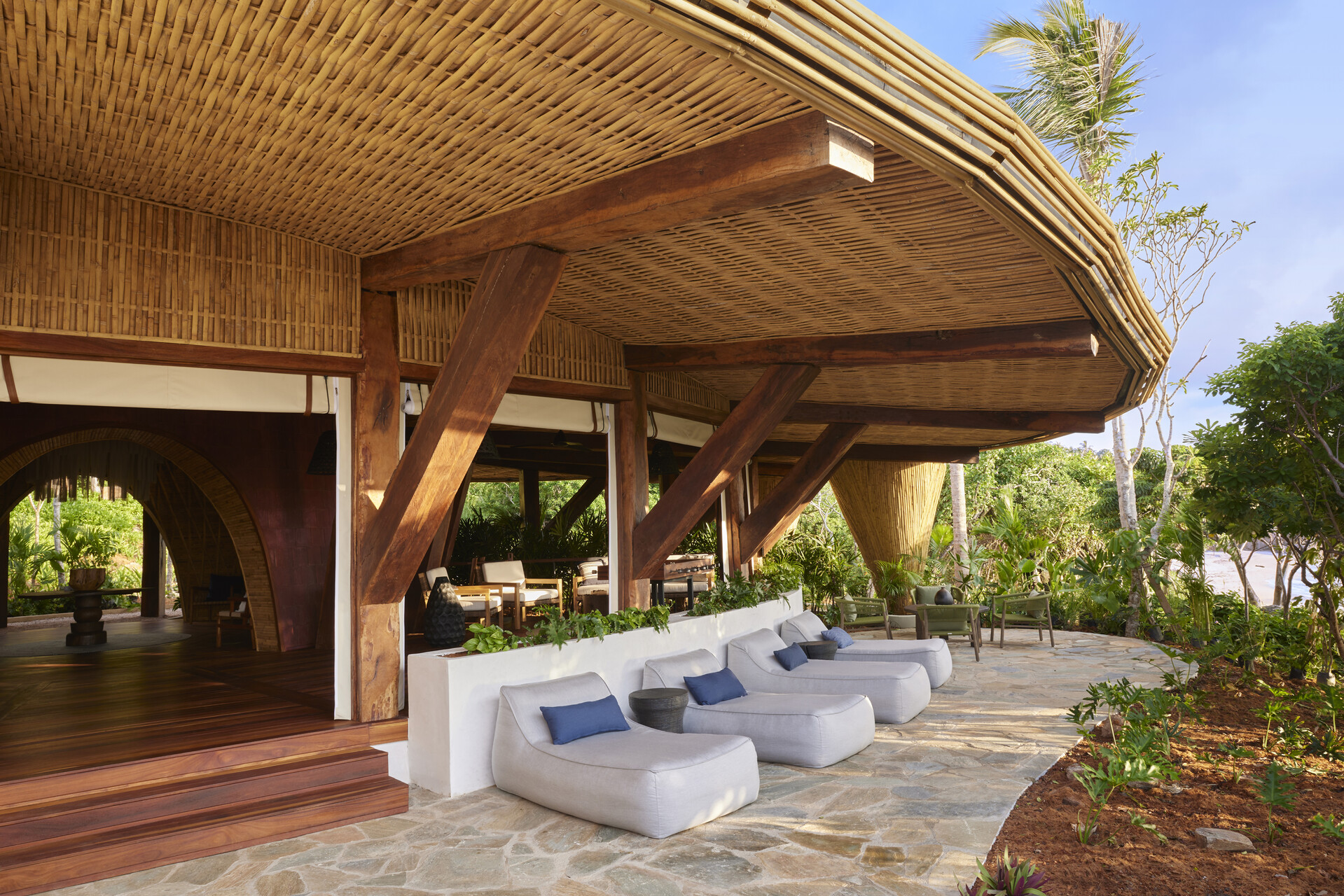
In tropical environments like Mexico's Pacific coast, rapidly renewable materials and traditional craft approaches naturally support both performance and local industry. At Naviva, a Four Seasons resort, bamboo becomes the primary structural and spatial system, supporting local industries and long-term material cycles. Traditional adobe techniques enhance thermal performance and reduce reliance on mechanical systems, drawing on vernacular wisdom evolved over generations. These decisions sustain skills, support local economies, and reduce future operational dependency.
In arid regions like the Klein Karoo in South Africa, we designed with ancient environmental logic. Thick stone walls, rammed-earth construction, and passive cooling strategies draw from deep understanding of climate and material behaviour.
Comfort emerges through mass, shade, and airflow, with architecture inherently aligned with its environment and simpler to maintain over time.
Across contexts, our questions remain consistent: What knowledge already exists here? What systems are already at work? How can architecture reinforce rather than override them? Regeneration is not about innovation for its own sake, but coherence between design, operation, and landscape.
Mediating Competing Demands
Regenerative hospitality often operates between two pressures: the desire for ecological and cultural depth, and the need for financial and operational practicality. Neither can stand alone. Lean too far in one direction and projects become unviable; lean too far in the other and they become extractive.
Our responsibility is to actively mediate these forces. We must acknowledge that ecological and social value cannot exist without operational reality, and that financial success is unsustainable if it undermines the systems supporting it.
Recognizing that regenerative systems are sustained by people requires deliberate investment in education, skills transfer, and shared understanding. Materials that weather, systems that demand care, and structures that evolve over time are not signs of failure, but evidence of stewardship and collective ownership. Long-term success depends on cultivating buy-in from those who build, maintain, and inhabit these systems. It is measured not at completion, but over time, through the health of ecosystems, the strength of communities, the adaptability of architecture, and the resilience of operations.
The Designers Role
Regenerative design asks designers to fundamentally reconsider our role. We are not authors imposing vision, but collaborators participating in existing systems. Our responsibility extends beyond the construction handover to the life of what we create, and to its graceful return to the landscape.
This demands different practices: longer engagement with sites and communities before design begins, collaboration with ecologists and local knowledge holders as equals, designing for adaptation rather than permanence, transparency about maintenance requirements and material lifecycles, and accountability to all stakeholders, not just clients.
Regeneration is not an upgrade to sustainability. It is a shift in mindset. It moves beyond checklists and technical compliance and asks a harder question: does our work strengthen or weaken the systems around it? It pushes the limits of our creativity and tests the reach of our vision. Can we see the web of relationships, the hidden links, the opportunities for renewal? For designers willing to take this on, regeneration is not about doing less harm. It is about contributing to living systems, shaping places that restore, adapt, and give back more than they take.