
Regenerative Hospitality leading the way: From possibility to practice
Synopsis
Nicola Gryczka Kirsch argues that regenerative hospitality is no longer an abstract ideal but a lived reality in places like Ibiti Projeto in Brazil, where tourism is designed as infrastructure for land restoration, community vitality, and long-term stewardship. Using the Lausanne Manifesto for Regenerative Hospitality as a compass, it shows how shifting mindsets, systems thinking and co-creation can turn hotels from extractive businesses into catalysts for thriving territories.
For a long time, regenerative hospitality has been part of industry conversations: admired, debated, sometimes misunderstood, and sometimes overmarketed. Often framed as an ideal, it has been positioned as something aspirational. Regeneration is meaningful, but distant; inspiring, but impossible to operationalize. Yet today, a shift is underway.
Across different geographies and contexts, regenerative hospitality principles are already being practiced in ways that restore ecosystems, strengthen communities, and redefine the relationship between guests, places, and those who steward and are endemic to them. This means that regenerative hospitality is no longer a hypothesis. It is real.
And that reality invites us to ask what hospitality could become if we learn from what is already working, rather than trying to invent or define something entirely new.
From concepts to lived practice
Much of the regenerative debate has focused on definitions. Is regeneration a philosophy or a framework? A mindset or a model? Should (or can) it be measured, certified, scaled?
These questions do matter, but I believe they can also keep us at a distance from what regeneration can look like in practice. Only when we go from asking “What is regenerative hospitality?” and begin focusing on “How does it look on the ground?” and “How can we learn from existent models?”, we move from theory to experience.
When you step into places where regeneration is lived reality, a few patterns become visible. Regeneration is not implemented through a checklist. Instead, it unfolds through time and an ongoing dialogue with communities and place. Hospitality, in these contexts, is not treated as a standalone business, but as part of a broader territorial living system. This role comes with substantial responsibility from conservation to being immersed in local economies, culture, and governance.
Guiding principles
A helpful reference point in the field is the Lausanne Manifesto for Regenerative Hospitality, co-created by academics and practitioners at EHL Hospitality Business School in 2025. It lays out a set of principles that help practitioners follow a common line of thought and translate place-based practice into shared understanding.
- Shifting mindsets: from extraction to reciprocity, from short-term performance to long-term flourishing
- Living systems thinking: recognizing hospitality as embedded within ecological, social, and economic systems locally
- Place-based and people wisdom: grounding decisions in the identity, history, and vocation of each place
- Co-creation through ecosystems of collaboration: mobilizing communities, entrepreneurs, institutions, and capital as partners
The semantics are not important, but how these principles are applied. When they remain abstract, regeneration stays an idealistic aspiration. When they are lived, however, hospitality begins to operate as a catalyst.
Regenerative hospitality principles in practice
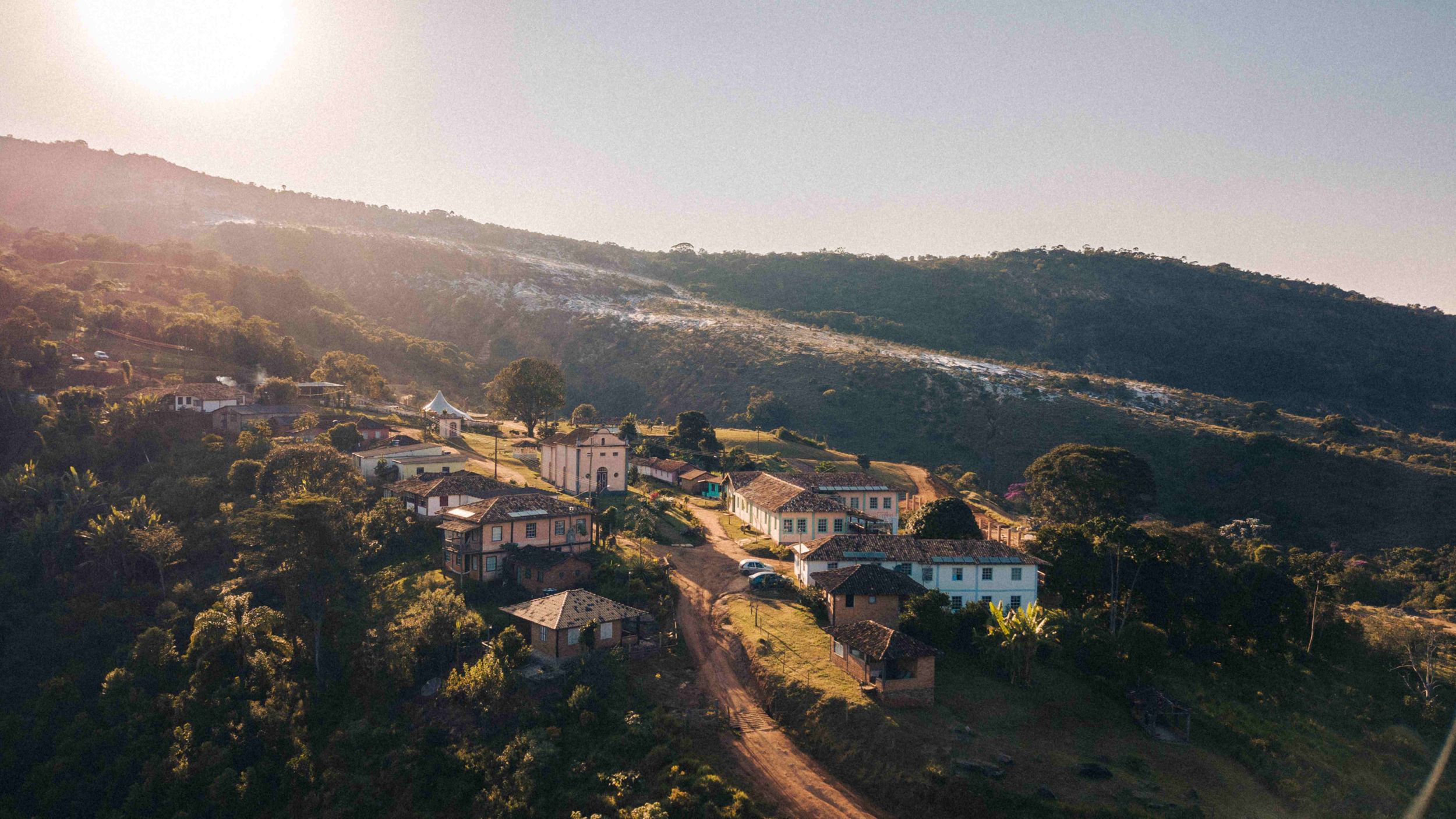
In Brazil, Ibiti Projeto embodies regenerative hospitality in practice.
Ibiti did not start as a hospitality concept. More than forty years ago, it began with a commitment to restore a damaged territory in the Mata Atlatica in Brazil. What was once degraded pastureland has gradually been regenerated through rewilding, protection of water sources, and the return of native ecosystems. Biodiversity came first, followed by water and, ultimately, trust.
Hospitality was the means to the end goal of making long-term land stewardship and community vitality economically viable and engage travellers in a meaningful way.
Seen through the Lausanne principles, Ibiti offers a clear line of learning:
Shifting mindsets: Success at Ibiti is not measured by occupancy rates or speed of expansion. Decisions are guided by what the land and surrounding communities can sustain, and by what will genuinely improve ecological and social conditions over time. Working in service of regeneration comes with accepting fewer guests, slower growth, and higher upfront investment, and these are not treated as signs of inefficiency.
Living systems thinking: The hospitality at Ibiti is designed to support regeneration rather than to drive growth for its own sake. Revenue generated through hospitality helps sustain regeneration across the territory through food production,
education, culture, entrepreneurship, and responsible land stewardship. Value is regifted to the environment rather than extracted.
Place-based and people wisdom: Everything follows the logic of place. Buildings adapt to the landscape and local traditions, and food follows seasons and local availability. Cultural life grows from local traditions while remaining open to new expression.
The core of the Ibiti experience takes place within the Mogol village, where guests live alongside the local community—not in a staged way, but by sharing everyday life and learning directly from their flow, traditions, and knowledge passed down over generations.
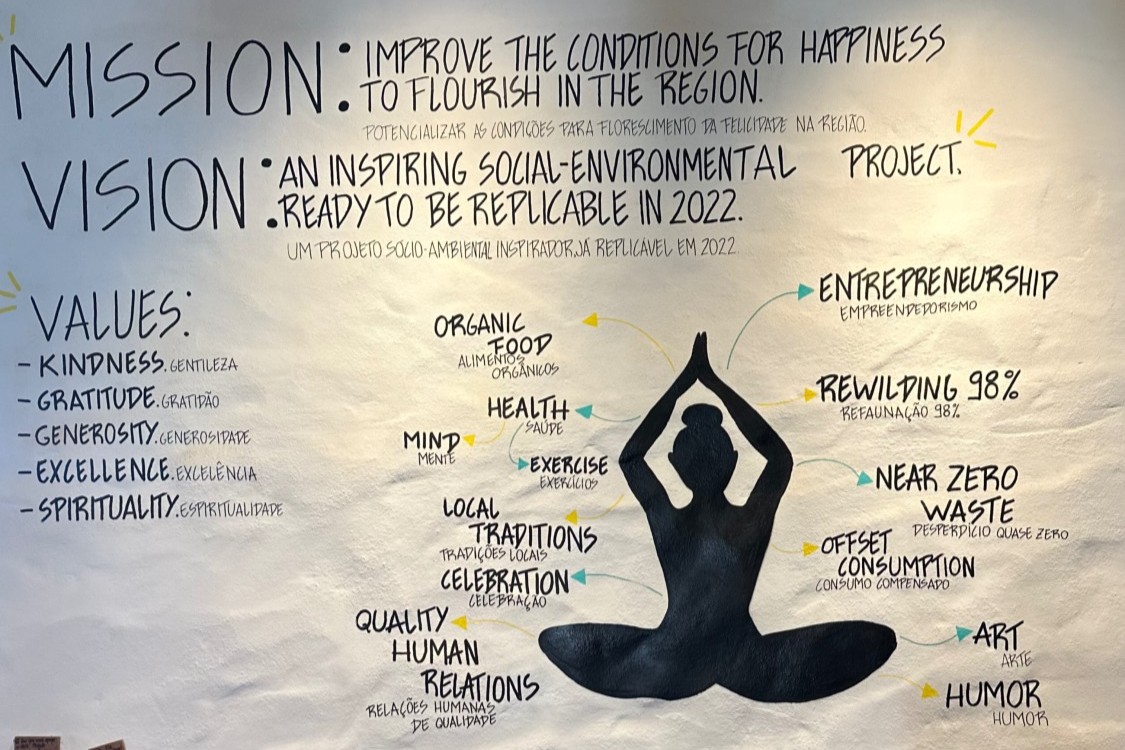
Co-creation through ecosystems of collaboration: Local entrepreneurs become partners through an integrated incubation program, and their role expands beyond suppliers or mere service providers. They operate businesses within the territory through shared principles and reciprocal economic arrangements that ensure value circulates back into the Ibiti system.
Relatedly, guests are not reduced to consumers, and instead become temporary participants in a living, breathing place. The experience is so impactful that many return over time as supporters, collaborators, or long-term allies and investors.
Ibiti epitomizes that hospitality can move beyond being a product to be scaled to becoming invaluable infrastructure for regeneration.
Why regeneration can’t just be copy-pasted
One of the most common traps is the urge to replicate success by standardizing it.
Traditional scaling logic assumes that what works in one place can be repeated elsewhere through consistent formats. Admittedly, that logic has delivered efficiency, but it has also contributed to ecological pressure and growing resistance from host communities. Regeneration follows a different logic altogether.
You cannot copy a regenerative hospitality model from one territory to another without stripping away the very qualities that make it regenerative. Each place carries its own rhythms, social dynamics, and cultural and community meaning. What restores one landscape may harm another.
This is why regeneration is always local.
What hospitality has the chance to become
Local does not mean isolated. If regenerative hospitality is already happening, then the opportunity ahead is not about re-invention. While we cannot blindly copy-paste, what can travel are the principles, approaches, stories, and learnings when they are carefully decoded.
Regenerative hospitality invites the sector to scale a flexible mindset and approaches instead of fixed models.
Hospitality has the chance to become:
- A learning industry, investing in communities of practice and shared knowledge
- A place-responsive industry, designing from local logic rather than imposing uniform solutions
- A deeply relational industry, prioritizing trust, agency, and long-term partnership
- A systems-aware industry, capable of navigating complexity with humility
- A steward of places, willing to define what “enough” looks like
The regenerative question is no longer abstract. The examples already exist. The next step is identifying and learning from them, adapting them with care, and listening to local communities and place-based knowledge, so hospitality strengthens the places and communities it depends on.